If you are trying to choose between a brand-new home and a resale home in Riverview, you are not alone. This is one of the most common decisions buyers face in a fast-growing area where new subdivisions and established neighborhoods both offer real options. The good news is that once you understand the tradeoffs around cost, timing, customization, and upkeep, the right fit becomes much clearer. Let’s dive in.
Riverview Gives You Both Options
Riverview has a housing market large enough to support both new construction and resale homes. According to PlanHillsborough, housing units in Riverview grew from 33,139 in 2015 to 49,368 in 2024, with projections reaching 58,651 by 2050.
That growth matters because it gives you more than one path to homeownership. You may find a brand-new home in a planned community, or you may prefer an existing home in an established neighborhood with its own layout, lot, and character.
About 85% of Riverview’s residential units are single-family homes, so many buyers are comparing detached homes in different stages of age and development. For budget context, Census QuickFacts reports a median value of owner-occupied homes of $384,200 and a median monthly owner cost with a mortgage of $2,033 for 2020 through 2024.
New Homes Offer More Choice
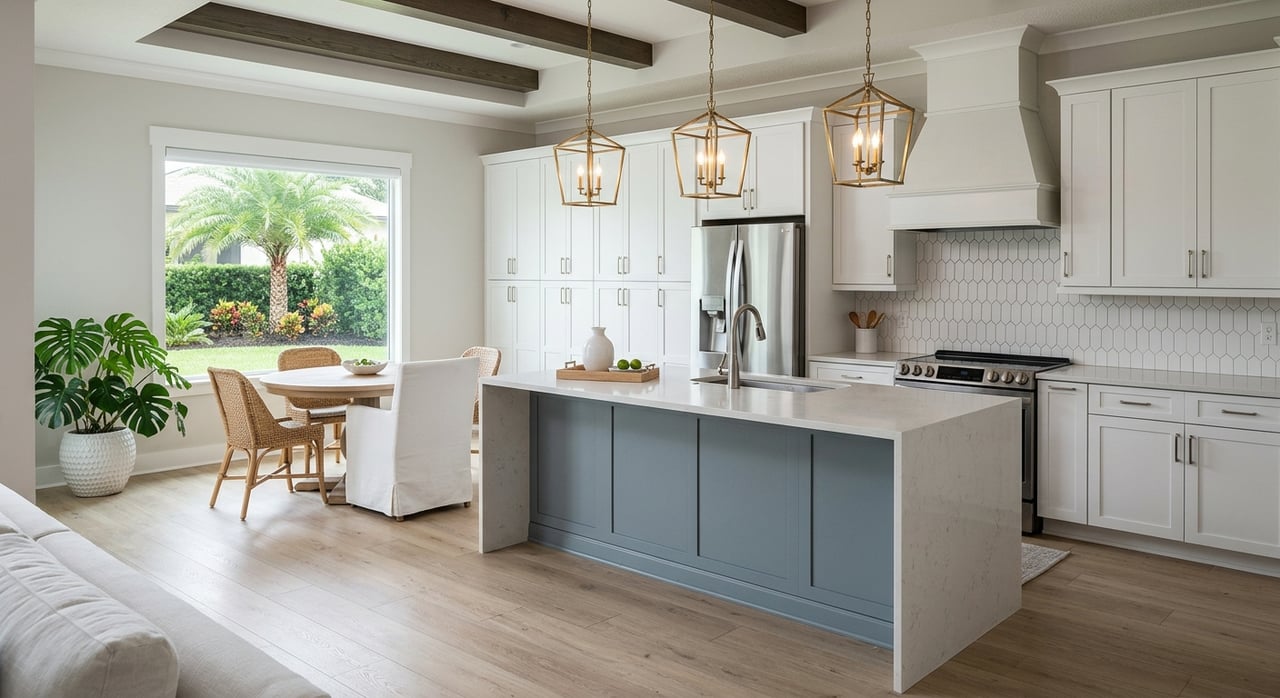
One of the biggest advantages of new construction is control. Many Riverview builders market open-concept layouts, modern interior features, and opportunities to choose finishes, floor plans, or even exterior styles.
Local examples show how wide that range can be. Lennar’s Gladesong includes plans such as a 3-bedroom, 2-bath home with 1,700 square feet, while another Riverview plan offers 3 bedrooms, 2 full baths, 1 half bath, and 1,743 square feet with an open-concept first floor. KB Home’s Magnolia Creek promotes plans with up to 6 bedrooms and 3 baths, along with features like walk-in pantries, large bedroom suites, upstairs laundry rooms, and personalization options.
If you like the idea of selecting your homesite, layout, or design details before move-in, new construction may feel like a better match. That extra control can be especially appealing if you want a home that feels more tailored from day one.
Resale Homes Show You The Exact Home
Resale homes offer a different kind of certainty. Instead of choosing from a model or a floor plan, you can walk through the exact property, see the lot, inspect the condition, and judge whether the layout works for your day-to-day life.
This can make decision-making easier if you want fewer surprises. Because resale homes reflect their original build era and any later updates, finishes and condition vary from one property to another.
That variation can be a strength if you find a home with upgrades you already love. It can also mean you need to budget for repairs, cosmetic changes, or future updates depending on the property.
Timing Can Be Very Different
Your move-in timeline is one of the most important factors in Riverview. Some new homes are already completed and move-in ready, while others are under construction or still listed as coming soon.
That means new construction can range from a fast move to a longer wait. If the home is not built yet, you may need patience and flexibility while construction progresses.
Resale homes usually follow a more traditional path from accepted offer to closing, assuming financing, title, and inspection move forward as expected. If you need to relocate quickly or want a more predictable short-term timeline, resale may have the edge.
Contracts And Deposits Work Differently
When you buy a home that has not been built yet, the contract process can look different from a standard resale purchase. The Consumer Financial Protection Bureau notes that builders may ask for an upfront deposit.
The same source also notes that you do not have to use the builder’s affiliated lender. That can matter if you want to compare financing options and make sure the overall terms work for you.
For protection, the CFPB recommends making offers contingent on financing and a satisfactory inspection. Those safeguards are useful whether you are buying new or resale, but they are especially important when comparing contract terms across builders and existing-home sellers.
Warranties Matter In New Construction
A major reason some buyers lean toward new homes is warranty coverage. Under Florida law, a builder must warrant a newly constructed home for construction defects that materially violate the Florida Building Code for one year from the initial conveyance or occupancy, whichever happens first.
Some builders also advertise broader written warranty coverage. In Riverview, KB Home promotes a 10-year limited warranty with 10 years for structural integrity, 2 years for mechanical systems, and 1 year for workmanship and materials. Highland Homes says its homes include a one-year builder warranty plus 2-10 Home Buyers Warranty coverage during that first year.
Still, warranty coverage is never something to assume. The FTC notes that many new-home warranties may exclude appliances, small cracks, and living or moving expenses during repairs, and some claims may be subject to arbitration.
Resale Homes Need Careful Inspection
Resale homes usually do not offer the same type of builder warranty package as a brand-new home. That is why inspections become such a key part of the process.
The CFPB recommends a satisfactory inspection contingency, and HUD strongly urges buyers to get a professional inspection before submitting an offer. In practical terms, this helps you understand the property’s actual condition before you fully commit.
For a resale purchase, inspection findings can shape your budget and your negotiation strategy. You may learn that the home is in great condition, or you may uncover repair items that affect your plans.
Monthly Cost Is Bigger Than Price
In Riverview, the smartest comparison is not just purchase price. It is your total monthly cost.
That means looking at principal and interest, property taxes, insurance, HOA dues, and any CDD assessment. Two homes with similar prices can carry very different monthly costs once those line items are added.
This is especially important in newer planned communities, where fees can vary widely. If you focus only on the sticker price, you may miss a meaningful difference in your long-term budget.
HOA And CDD Fees Need A Close Look
Florida homeowners’ associations set assessments through recorded governing documents and annual budgets. Those assessments must follow the member’s proportional share of expenses.
CDD charges are different. Under Chapter 190, community development districts are special-purpose governments that may levy taxes or assessments to pay for the construction, operation, and maintenance of public facilities and services, and those charges are in addition to county and other local taxes.
Florida also requires a combined notice of ad valorem taxes and non-ad valorem assessments on the property tax bill, and the Department of Revenue says the tax roll describes each non-ad valorem assessment included on the bill. In plain language, a CDD can show up on your tax bill, so it is important to review it carefully before you buy.
Local examples show why this matters. Lennar’s Gladesong lists approximate monthly HOA fees of $150.18, while KB Home’s Magnolia Creek says its planned community has no CDD fees.
Which Option Fits Your Priorities?
If you want more say in layout, finishes, and the overall feel of the home, new construction may be the better fit. In many cases, new homes reward patience and planning.
If you want to see the exact home today, move faster, and evaluate a property based on its current condition, resale may make more sense. In many cases, resale rewards speed and property-by-property comparison.
Neither option is automatically better. The right choice depends on how quickly you need to move, how much customization you want, and how comfortable you are with builder timelines, deposits, inspections, and ongoing costs.
A Simple Riverview Decision Checklist
Use these questions to narrow your decision:
- How quickly do you need to move?
- Do you want to choose a homesite, floor plan, and finishes, or buy the exact home you can inspect today?
- Are you comfortable with a builder deposit and a longer timeline if the home is not complete?
- Have you priced the full monthly payment, including taxes, insurance, HOA dues, and any CDD assessment?
- If the home is new, what does the builder warranty cover, how long does it last, and what is excluded?
- If the home is resale, have you budgeted for repairs, updates, and inspection findings?
- Is there an HOA, and what does the fee cover?
- Is there a CDD, how much is the annual assessment, and does it appear on the tax bill?
- If you are buying a nearly new resale home, does any builder warranty transfer to the next owner?
When you answer those questions honestly, the decision usually gets easier. What looks best on paper is not always what works best for your budget, timing, or comfort level.
If you want help comparing Riverview new construction and resale options side by side, TQ Real can help you look beyond the listing photos and focus on the numbers, timeline, and details that matter most. To start your home search with responsive local guidance, connect with TQReal.com.
FAQs
What is the main difference between new and resale homes in Riverview?
- New homes usually offer more customization and possible warranty coverage, while resale homes usually offer a faster path to closing and the chance to inspect the exact property before buying.
Do new construction homes in Riverview always take longer to buy?
- Not always. Some new homes are move-in ready, while others are under construction or coming soon, so the timeline depends on the specific property.
Are HOA and CDD fees common in Riverview new-home communities?
- They can be, but they are not the same in every community. Buyers should review HOA dues, check whether a CDD applies, and confirm how those charges affect the total monthly cost.
Do new homes in Riverview come with a warranty?
- Florida law requires a one-year warranty for certain construction defects that materially violate the Florida Building Code, and some builders also offer broader written warranties with different terms and exclusions.
Why is a home inspection important for resale homes in Riverview?
- Because resale homes vary by age, condition, and updates, a professional inspection helps you understand repair needs, maintenance issues, and the home’s overall condition before you move forward.