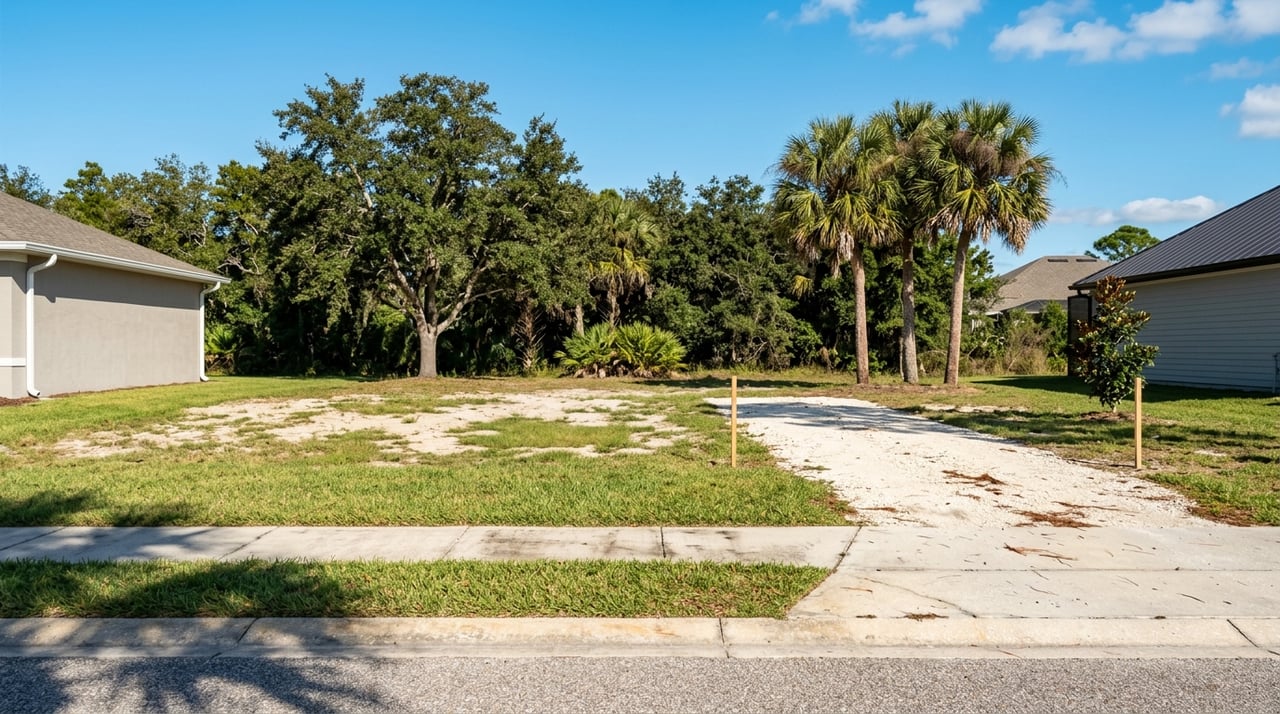
Thinking about buying land in Zephyrhills as a small investor? It can be a smart move, but only if you understand what you are really buying. In this market, a low purchase price alone does not tell you whether a parcel is usable, financeable, or worth developing. If you want to avoid costly surprises, you need to look closely at zoning, utilities, flood risk, and local review rules before you close. Let’s dive in.
Why Zephyrhills Stands Out
Zephyrhills is not a simple land market where every vacant lot works the same way. The city has an active planning system that includes a zoning map, a future land use map, a Community Redevelopment Area, a historic district layer, and a form-based code area. The city also notes that its electronic Land Development Code may not reflect the latest amendments, which is why zoning verification is an early must-do step for any buyer. You can review the city’s land use resources through the Zephyrhills Land Development Code page.
For small investors, that structure can create opportunity. Zephyrhills’ comprehensive planning policies support infill, redevelopment, mixed-use categories, walkable areas, and coordination with Pasco County. In practical terms, that means some of the strongest opportunities may be smaller infill or transition parcels, not just large raw tracts on the edge of town, according to the Future Land Use Element.
Start With Jurisdiction
Before you get excited about any parcel, confirm whether it is inside the City of Zephyrhills or in unincorporated Pasco County. That single detail affects zoning, future land use, permitting, and even millage rates. The city’s mapping resources explain that jurisdiction appears in parcel records and directs buyers to the correct office for buildability questions through its maps and demographics page.
This matters because two nearby parcels can follow different rules if they sit under different governing bodies. A lot inside city limits may have one review path, while a county parcel may follow another. If you skip this step, your timeline and cost estimates can quickly fall apart.
Understand Zoning Before You Offer
Zoning tells you how a parcel may be used today, while future land use helps you understand the broader long-term planning vision. Zephyrhills has a wide range of zoning districts, including residential, commercial, office, industrial, recreation, planned unit development, and special downtown or corridor districts. The current mix is shown on the 2024 base zoning map.
If you are a small investor, do not assume that a vacant parcel can automatically support your plan. The city’s planning FAQ says all new construction on a vacant lot should have zoning and use verified with the Planning Department before work begins. It also notes that many vacant lots may sit inside the CRA or Historic District, where extra design standards can apply, as explained in the city planning FAQs.
What density numbers really mean
The city’s Future Land Use Element gives a useful starting point for estimating scale. Residential Estate allows 0 to 2.0 dwelling units per gross acre, Residential Suburban allows 2.5 to 7.5, Residential Urban allows 7.5 to 14, Mobile Home/RV allows 5 to 18, and Mixed Use allows 0 to 15 dwelling units per gross acre.
These are planning densities, not guaranteed lot sizes. They help you estimate what might be possible, but roads, drainage, open space, and layout requirements can change the final outcome. That is why the density chart is a screening tool, not a final answer.
Look for Small-Investor-Friendly Parcel Types
In Zephyrhills, some of the best value-add potential may come from parcels that fit the city’s growth direction. The city’s housing policies support a broad mix of housing forms, including modular housing, townhouses, cluster development, zero-lot-line homes, small lot sizes, accessory units, manufactured home developments, mixed residential uses, and second-floor housing over ground-floor commercial or office space. You can see that direction in the Housing Element.
That does not mean every lot can support those uses. It does mean the city’s policy framework is more flexible than many buyers expect, especially for well-located sites with the right zoning and utility access. For a small investor, this can open the door to more than a basic buy-and-hold lot strategy.
Infill and corridor parcels
Zephyrhills is especially interesting if you are looking at infill and redevelopment opportunities. The city’s planning documents point toward redevelopment and mixed-use activity, and the Form-Based Code for the U.S. 301/Gall Boulevard corridor was adopted to support development, redevelopment, complete streets, and expanded housing options.
Parcels in or near that corridor may deserve extra attention. They can offer stronger upside if your intended use matches the corridor standards, but they can also involve a different review process than a standard lot in a conventional subdivision.
Utilities Can Make or Break the Deal
A parcel without practical utility access can become much more expensive than it first appears. Zephyrhills operates a substantial utility system with multiple water treatment plants, extensive distribution lines, and reclaimed water infrastructure, according to the city’s Utilities Department. That is a positive sign, but availability still needs to be confirmed parcel by parcel.
The city’s utility rates also make location matter. According to the water and sewer rate schedule, outside-city utility customers pay a 25 percent surcharge, and there are onboarding costs such as turn-on charges and residential deposits. Meter and capacity charges are handled separately, so your actual setup cost may be higher than the basic account fees.
What if sewer is not available?
If a parcel cannot connect to city sewer, septic becomes a major feasibility question. In Pasco County, new septic installations, repairs, modifications, and approvals of existing systems require permits through the county health department. You can confirm those requirements through the Florida Department of Health in Pasco County.
For a small investor, this step can affect everything from site design to closing risk. A cheap lot with unclear septic feasibility may not be cheap at all once testing, redesign, or permit limitations come into play.
Flood Risk Needs Early Review
Never assume a vacant lot is straightforward just because it looks dry. Flood zone status can affect buildability, insurance costs, and financing. The official public source for this check is FEMA’s Flood Map Service Center.
This is one of the easiest due diligence steps to do early, and it can save you from chasing the wrong parcel. If flood constraints are present, you want to know that before you spend money on design work or move too far into contract.
Budget Beyond the Purchase Price
One of the most common mistakes small investors make is underwriting only the acquisition cost. In Zephyrhills, development-related fees can materially change your numbers. The city’s transportation impact fee schedule lists $5,704 for a single-family detached dwelling and $4,082 for a multifamily dwelling unit, effective October 21, 2024.
Those are not land-only costs, but they matter if your exit strategy involves new construction, redevelopment, or a lot split. Add utility connection costs, possible septic work, site prep, drainage, and timeline-related carrying costs, and a thin-margin deal can disappear quickly.
Use Public Records to Verify the Story
Before you buy, compare the seller’s description with parcel-level public records. Pasco County’s property records search tool lets you review parcel ID data, owner information, addresses, subdivisions, recent sales, and map-based parcel details.
This step can help you confirm lot lines, ownership history, and whether the basic parcel facts match what you were told. It is a simple but powerful way to screen for inconsistencies before you commit more time and money.
A Practical Zephyrhills Checklist
If you want a quick way to evaluate a parcel, use this sequence:
- Confirm jurisdiction between the City of Zephyrhills and unincorporated Pasco County.
- Verify zoning and future land use before assuming your intended use will work.
- Check overlays such as the CRA, Historic District, or Form-Based Code area.
- Review access and frontage along with easements, drainage, and road approach issues.
- Confirm utility availability and determine whether city water and sewer are actually accessible.
- Check septic feasibility if sewer is not available.
- Screen flood risk early using FEMA maps.
- Pull parcel records to verify ownership, history, and map details.
- Estimate total development cost including impact fees and utility-related charges.
- Ask about timing if your plan requires site review or formal planning action.
Timing Matters More Than Many Buyers Expect
If your plan goes beyond simply holding the land, understanding review timing can help you build a better contract strategy. The city says the Site Plan Review Committee meets every third Tuesday, with submittals due by the last business day of the month. The city also notes in its planning resources that planning applications are due by the last business day of the month at 4:00 p.m., which you can review on the Site Plan Review Committee page.
For small investors, timeline awareness matters because delays affect carrying costs and project momentum. Even a promising infill parcel can become less attractive if your expected review path is longer than you planned.
What Makes a Strong Land Buy Here
In Zephyrhills, the strongest small-investor opportunities often share a few common traits. They usually have verified jurisdiction, clear utility access, compatible zoning and future land use, manageable overlay conditions, and a realistic path to the intended use. Many of the best candidates are infill lots, corridor parcels, or sites that support smaller housing formats or mixed-use redevelopment under the city’s policy framework.
If you are considering land in Zephyrhills, your edge is not just finding a parcel. It is knowing how to screen it faster and more accurately than the average buyer. If you want help evaluating land opportunities and understanding how a specific parcel fits your goals, connect with TQReal.com.
FAQs
What should small investors verify first when buying land in Zephyrhills?
- Start by confirming whether the parcel is inside Zephyrhills city limits or in unincorporated Pasco County, because jurisdiction affects zoning, permitting, and taxes.
What zoning details matter most for Zephyrhills land buyers?
- You should verify both the current zoning district and the future land use category, then confirm whether your intended use is allowed without extra approvals.
What utility questions should land buyers ask in Zephyrhills?
- Ask whether city water and sewer are available to the parcel, what connection or surcharge costs apply, and whether septic approval is needed if sewer is unavailable.
What flood check should Zephyrhills land investors use?
- Use FEMA’s official Flood Map Service Center to review flood hazard status before assuming a lot is easily buildable or financeable.
What extra review areas can affect Zephyrhills vacant lots?
- Some parcels may fall within the CRA, Historic District, or Form-Based Code area, which can add design standards or change the review process.
What fees should small investors include when budgeting land in Zephyrhills?
- In addition to the purchase price, include transportation impact fees, utility-related charges, possible septic costs, and site development expenses in your numbers.